
Easy, practical tips for reading aloud to kids ages 3 to 8: choosing books, using voices, pausing for pictures, asking questions and making story time a happy habit.
Reading aloud is one of the simplest and most loving things a grown-up can do with a child. You do not need special training, a perfect voice or a big library. You need a book, a few quiet minutes and a little bit of playfulness. These twelve tips come from the way we read at Story Hour, and they work at home just as well.
Why reading aloud matters
When you read to a child, you are doing much more than telling a story. Children hear new words they would never meet in everyday talk. They learn how stories work: a beginning, a problem and an ending. They practice listening and imagining. Most of all, they connect books with feeling safe and close to someone who loves them. The American Academy of Pediatrics encourages parents to read with children from infancy, because shared reading supports language and bonding.
Before you start
1. Pick a book you enjoy too
Children can tell when a grown-up is bored. Choose stories you like reading, and save the ones you cannot stand for days when your child insists. Picture books with short sentences, strong pictures and a bit of repetition are perfect for ages 3 to 8.
2. Make a cozy spot
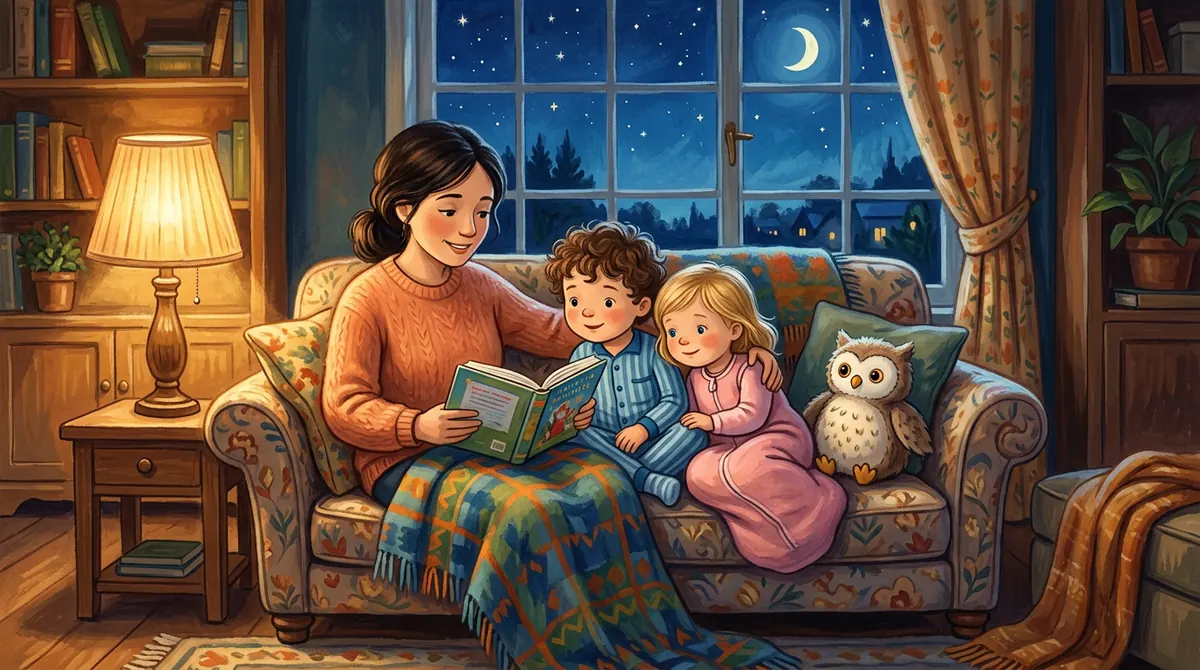
A corner of the couch, a bed or a pile of pillows on the floor all work. Sit so your child can see the pictures easily. Turn off the television and put phones face down.
3. Look at the cover together
Before reading, look at the cover and ask, "What do you think this story is about?" It gets your child curious and ready to listen.
While you read
4. Slow down
Most grown-ups read aloud too fast. Children need time to hear the words and look at the pictures. Try reading a little slower than feels natural, and pause at the end of each page.
5. Use your voice
You do not have to be an actor. Just change your voice a little: softer for a sleepy owl, louder for a big bear, slower for a spooky part. Even small changes help children follow who is talking.
6. Let the pictures talk
In a picture book, the pictures tell half the story. Stop now and then and let your child point things out. "Where is the little mouse hiding?" turns listening into looking.
7. Invite them to join in
If a book has a repeating line, pause and let your child say it. Many children love finishing rhymes or making the animal sounds. Joining in keeps them involved and builds early reading skills.
8. Ask a few gentle questions
Questions like "What do you think will happen next?" or "How do you think she feels?" help children think about the story. Do not quiz them on every page. One or two questions per book is plenty.
After the story
9. Talk about it, briefly
Ask what part they liked best, or share yours. Connect the story to their life: "Remember when you were nervous on your first day too?" Keep it short and natural.
10. Read it again (and again)
Young children often want the same book every night. That is good news. Repeating a story helps children learn new words, notice details and feel confident. It is normal and healthy.
Make it a habit
11. Pick a regular time
Many families read at bedtime, but after school, after lunch or on weekend mornings work too. A regular time turns reading into something your child looks forward to. Our guide to a calm bedtime story routine has ideas.
12. Keep it fun, not perfect
If your child wiggles, wanders off or wants to skip pages, that is okay. Young children have short attention spans, especially at the end of a busy day. Stop while it is still fun and try again tomorrow.
Reading with more than one child
Reading to siblings of different ages can be tricky. Let the younger child sit closest to the pictures. Ask the older child to read a line, turn the pages or do a character voice. Taking turns choosing the book keeps things fair.
When you are short on time
Even five minutes counts. A short poem, a single picture book or a few pages of a longer story all help. You can also join our weekly Story Hour read-aloud as a cozy treat, then talk about the story together afterward.
Questions parents ask
What age should I start reading aloud to my child?
You can start from birth. Babies enjoy hearing your voice and looking at bold pictures. For ages 3 to 8, picture books with short sentences and strong pictures work best.
How long should a read-aloud session be?
For young children, 10 to 20 minutes is a good goal, but even five minutes helps. Stop while your child is still enjoying it.
Is it okay to read the same book over and over?
Yes. Repetition helps children learn new words, understand the story more deeply and feel confident. It is completely normal for young children to ask for the same book again and again.
Should I keep reading aloud after my child can read alone?
Yes. Reading aloud lets children enjoy stories that are above their own reading level, and it keeps reading a shared, happy time.